Wellington is the equestrian capital of the region, and that single fact shapes roofing here more than climate does. Alongside the conventional suburban housing there are barns, stables, covered arenas and grooms' quarters, and those are metal panel buildings rather than tile or shingle roofs. They need a different system, different fastening and a contractor who understands that a leak over a stall is a different problem from a leak over a living room.
Season governs the calendar. The Winter Equestrian Festival runs January through April and the equestrian neighborhoods are at their busiest and most sensitive exactly then. Noisy tear-off work close to barns during show season is a genuine problem, because horses do not tolerate it. We schedule barn and near-barn work outside those months wherever possible, and where it cannot wait we plan hours around turnout and training.
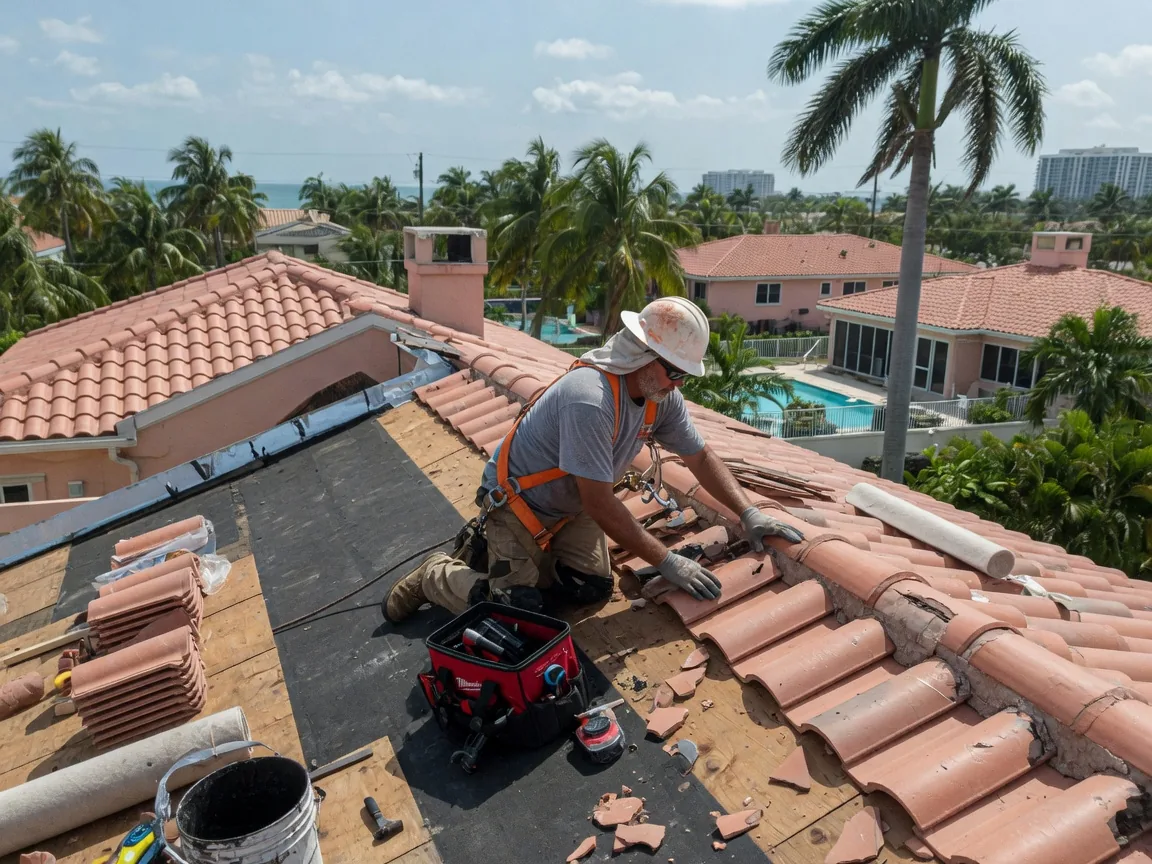
On the residential side, Wellington is 1980s and 1990s master-planned housing under HOA governance, mostly concrete tile, much of it now at or past the underlayment window. Those roofs need a lift and relay rather than new tile, and they need architectural committee approval before material is ordered, same as Palm Beach Gardens.
Wellington sits inland, which removes salt from the equation but introduces drainage. Ground is flat, the water table is high, and summer storms drop a lot of water fast. Gutters, downspouts and where they discharge matter more here than they do near the coast, because water that does not get away from the structure finds its way into soffits and fascia instead.
Around Wellington
We regularly work near:
- 📍The Mall at Wellington Green
- 📍Wellington Regional Medical Center
- 📍Village Park
- 📍Wellington High School
- 📍Palm Beach International Equestrian Center
- 📍Wellington Community Center
Roofing in Wellington: Local Notes
- •Equestrian properties bring barns, stables and covered arenas roofed in metal panel, a different system from the residential stock.
- •The Winter Equestrian Festival runs January through April, when noisy work near barns is scheduled around turnout and training or deferred entirely.
- •Residential stock is 1980s and 1990s master-planned housing under HOA architectural review, predominantly concrete tile.
- •Much of that tile is now past the 15 to 25 year underlayment window and needs a lift and relay rather than new tile.
- •Inland location removes salt exposure but raises the importance of gutters and drainage, with flat ground, a high water table and heavy summer rainfall.